As a corporate priority, companies are now making tangible moves to create value through Environmental, Social and Governance (ESG). But what does it really mean beyond the buzzwords and terminology? In KBS’ three-part series, we’ll take a deep dive into each element of ESG — and its strategic application to the commercial real estate industry (CRE).
A lot of buzz is being generated these days around the importance of sustainability. So much so, that headline-grabbing efforts, including the rise of environmental activism and the surge in climate-change advocacy, have inspired builders and tenants to strive for greater energy efficiency. It’s a trend that continues to gain crucial momentum.
As global warming continues to be a hot topic and area of concern, especially for millennials who will make up 75% of the workforce by 2030, the “net zero” office space concept has taken hold.
Smart cities are no longer visions of the future, they are here today and look a little different from what the world envisioned pre-2000. Today’s smart cities take advantage of Big Data and Internet of Things (IoT) to create better, cleaner and more efficient urban hubs, making for a better quality of personal and professional life than would otherwise be possible.
Sustainability is both an opportunity and a necessity for the commercial real estate (CRE) industry, which increasingly leverages it to serve people and future possibilities.
Today, the thought of commercial real estate elicits visions of concrete-and-steel-laden structures. While the use of traditional materials continues to play the largest role in construction, timber, brick and other renewable natural materials have captured the imaginations of eco-conscious architects and tenants looking to break free of the conventional office space.
Despite being more than a quarter into the calendar year, the clock continues to tick closer to the drop deadlines for net-zero carbon emissions at local, state, federal and global levels. Commercial real estate has prioritized industry trends in environmental, social and governance (ESG) to lead decarbonization efforts worldwide. CRE — a significant contributor to global carbon emissions — but an industry poised to make significant an impact for reversal — is leading the charge.
Commercial property owners have found a way to increase office building sustainability while providing an experience for tenants that’s both entertaining, educational, and environmentally friendly.
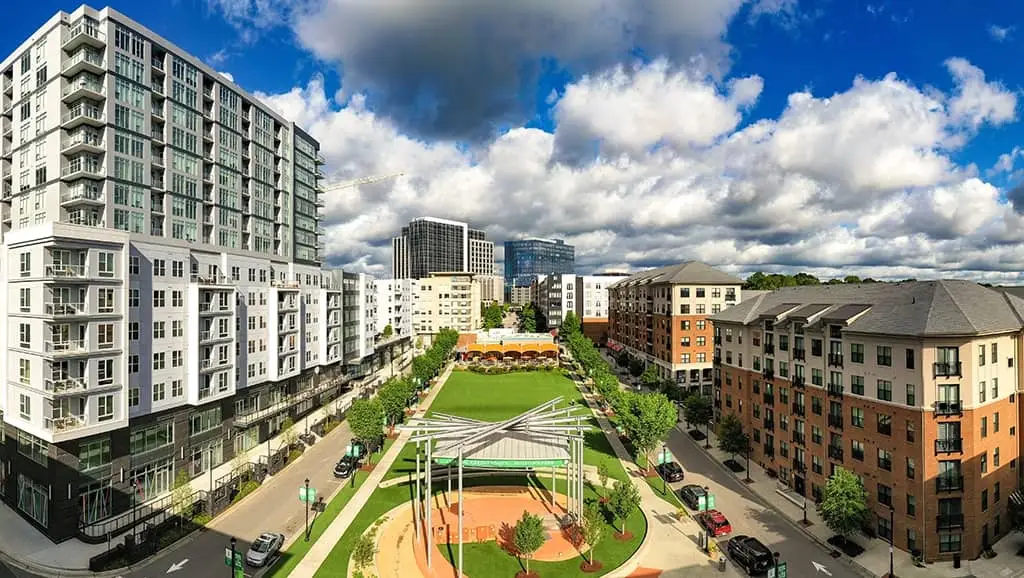
Walkability has become an increasingly important strategy for businesses and employers. Prior to COVID-19 restrictions, these “live, work, play” destinations were rising in demand and commanding a premium that companies and individuals/families are willing to pay.