
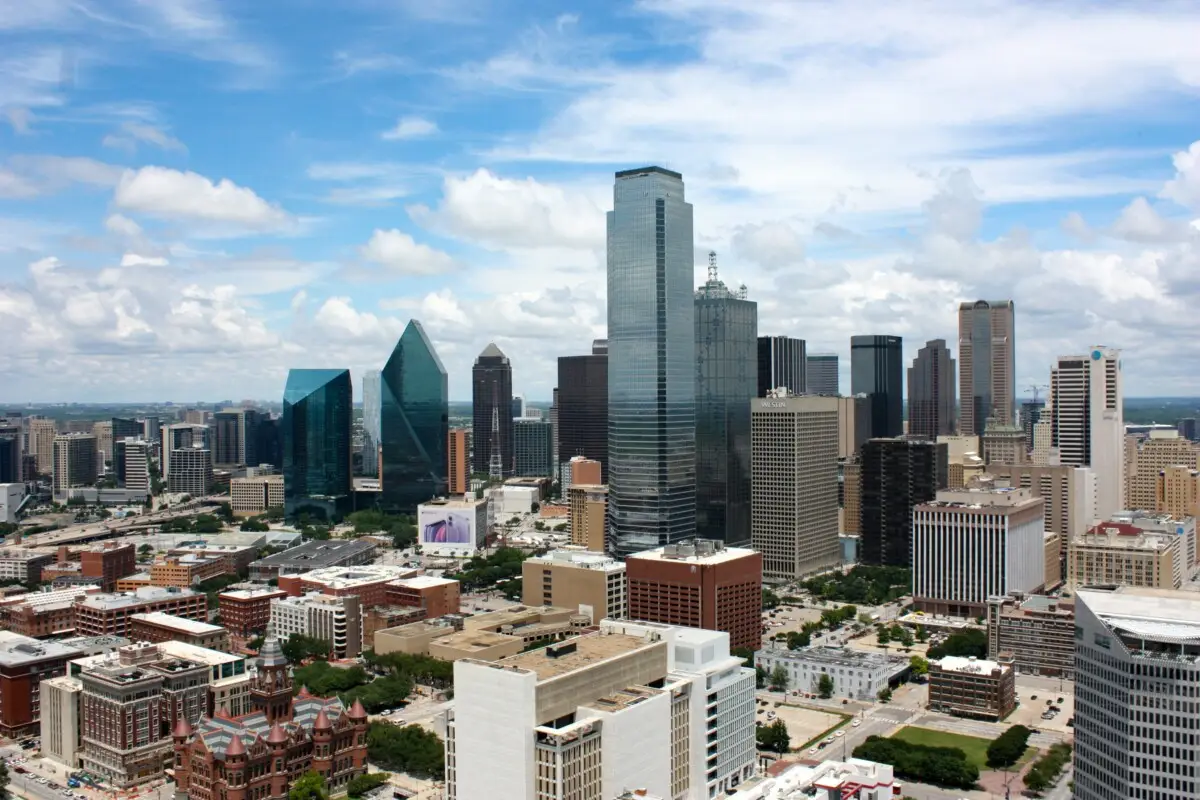
One year ago, JLL’s Torrey Littlejohn told D CEO she was seeing “green shoots of positivity” emerging in Dallas’ office market. As she predicted, the market does appear to be slowly growing.
Reports from Cushman & Wakefield show positive net absorption for DFW’s office market in the second quarter of 2025—and throughout the first half of the year. And for the first time since the second quarter of 2021, absorption for direct and sublease space was positive—that’s expected to normalize through the rest of the year. New leasing reached 6.8 million square feet—the strongest pace in three years, with midsize tenants showing strong activity.
But there are headwinds, too: DFW’s office-using growth softened, increasing by just 0.7 percent year over year. And vacancy for the quarter landed at 24.9 percent, remaining at a 20-year high. (Cushman projects a decrease in vacancy moving forward).
To get a fully fleshed-out understanding of DFW’s office market midyear, D CEO turned to three market experts. Two of them—Bill Cawley and KBS SVP Brett Merz—gave insights from the owner/operator perspective. Cushman & Wakefield’s Robbie Baty gave input from the tenant rep side.
Here are the highlights from those conversations:
Bill Cawley, Chairman and CEO of Cawley Partners
“I definitely think we’re off the bottom.”
Investment money is back in, Cawley said. If you tried to sell an office building 18 months ago, he added, it would have garnered maybe three offers. “The Preston Center building just went under contract—they had 20 offers,” Cawley said. “Anything that’s of quality, money’s back in. So we’re in recovery. People are back in, willing to invest.”
But the game has changed. “Dallas has always been a big deal city,” Cawley explained. By the old rules, that meant the play was to buy or build big blocks of space and wait for a large tenant to show up.
Not so today. “Corporate America and the big deals, they’re coming back—but slowly,” Cawley said. “There are still big deals, but the depth of them is much shallower compared to five years ago.”
Cawley’s new playbook: medium-sized deals in the 8,000 to 30,000 square foot range. Filling a big building now requires slower, steadier work. That means it’ll take a couple more years to lease up a new build compared to what the pro forma says—but the upside is that asking rents are higher, even in the midst of the elevated vacancy rates. “Local entrepreneurial companies are all in,” Cawley said. “They’re back to the office, and they’re growing and making decisions.”
A key factor in those decisions is commute times—especially post-pandemic. “People are not going to live in Prosper and drive downtown—they’re not doing it anymore,” Cawley said. “I think it’s 15 to 20 minutes max. That’s why you see a lot of these big companies splitting up locations—they’ve got a Plano location and they’ve got one in Uptown.”
Four years ago, Cawley said, he could have built a new office building with 30 percent equity and 70 percent leverage. Those ratios have shifted to 50:50—building new product is a larger investment these days.
Added to that is the fact that people want a higher return on an office building purchase than they were wanting five years ago—because they see office as a risky asset. “But the rents are going to help get those returns so that there’s going to be an exit,” Cawley said. “So I’m very optimistic. It’s getting better.”
Brett Merz, Senior Vice President and Co-Director of Asset Management at KBS
Flight to quality is still a trend, Merz said, but tenants are now coming to the table with a more balanced approach. It’s starting to be more about economic drivers, value, clarity, and mitigating risk. “They’re entering negotiations well-informed and thoughtful about their real estate strategy,” Merz said.
The first half of 2025 performed slightly better than expected, Merz said—but that’s not necessarily a surprise—especially in Preston Center, Knox Henderson, Legacy, and Turtle Creek.
These days, he says, tenants’ flight to quality is zeroing in on lifestyle integrating. “Tenants aren’t just looking for high-end finishes, they’re prioritizing spaces that offer wellness features, walkability, and access to retail or hospitality,” Merz said. “In response, we’re investing in enhancements that elevate the tenant experience, whether that’s outdoor collaboration areas, on-site fitness, or smart building upgrades, so our assets remain competitive in a discerning market.” An example: the company recently added a new amenity floor to Sterling Plaza.
Merz, too, noted that lenders seem to be more open to office financing. “Our in-house finance team has successfully refinanced more than $1.3 billion in the last year for KBS REIT III, as well as multiple loans for other KBS funds,” he said, “which has further stabilized our portfolio and positioned us well for future activity.”
The uncertainty around macroeconomic factors like tariff tensions and geopolitics could trickle into local impacts, he said, but Dallas is still a bright spot as a market. “The real opportunity is in earning tenant loyalty, investing smartly in our portfolio,” he said, “and delivering spaces that elevate the employee experience and drive long-term business success.”
Robbie Baty, Vice Chairman and Dallas Tenant Rep Lead of Cushman & Wakefield
“I didn’t expect this much positive activity when I was going into the year.”
But in the first half of 2025, Robbie Baty said there have been more companies signing leases, specifically in Uptown. Amidst tariff discourse earlier this year, Baty said, the result was a pleasant surprise.
But there are headwinds to keep an eye on—Baty predicted that a limitation of new supply will be one of the big ones. Cushman & Wakefield noted that construction is expected to remain “unusually low for the foreseeable future,” with 23 Springs in Uptown listed as one of the few expected deliveries this year.
“Construction’s at the lowest level since 2011,” Baty said. “We have a few buildings that are being completed, and once those are done, there’s not going to be new supply coming online in the next couple years. So I would say a shortage of available new space is going to hinder the market somewhat.”
Looking ahead, Baty said the market’s biggest opportunities are in relation to Dallas’ burgeoning Y’all Street phenomenon. Baty thinks that momentum will spill over into other industries within the DFW market.
Andrew Matheny, a senior research manager for Cushman, noted: one of the reasons the Dallas market saw positive absorption early this year is that most tenants have already right-sized post pandemic—there are few companies that have yet to do so. Matheny expects some big blocks of space to come to market, which could weigh down on absorption. “But I don’t think that’ll necessarily take away from the momentum we’re seeing in leasing,” he added.
In June, Cushman released its latest “What Occupiers Want” report, which releases every other year. Matheny pointed out that just 32 percent of occupiers have future plans for more downsizing.
“The rest of them—so that would be 68 percent—were going to keep their portfolio the same or start growing and expanding again,” Matheny said. “And so that lends credence to this idea that we’re finally coming out of the inflection point of the remote work impact on the office sector. And as that continues to grow, I think we’ll start seeing the Dallas market resemble what we’ve always seen, which is job growth, positive absorption, and continued momentum.”
Story first published in D Magazine