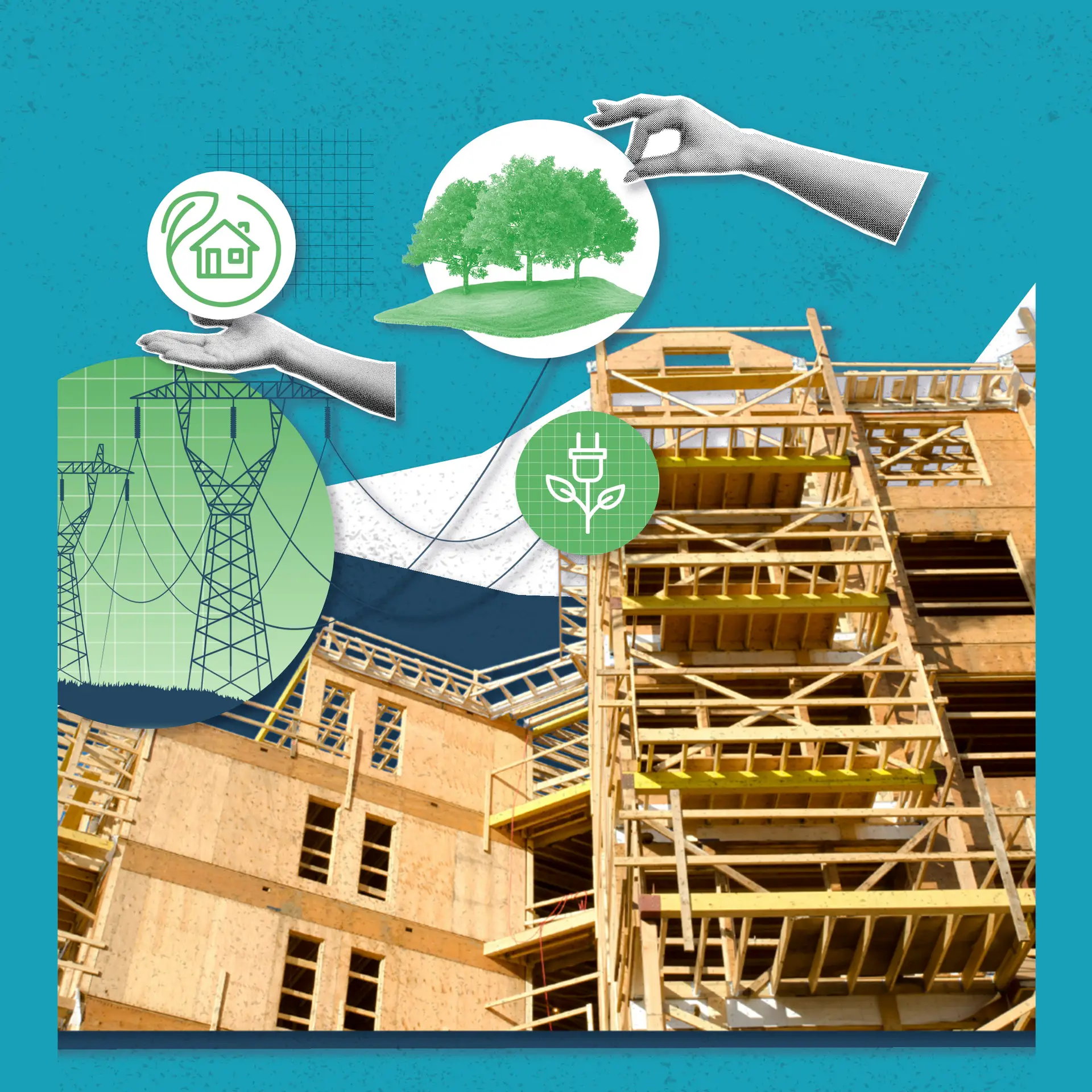
As commercial real estate (CRE) stakeholders look to futureproof buildings and maximize their investments, advances in sustainable practices are leading the way. At KBS, we prioritize sustainability at our properties through focused energy, water, and wastemanagement strategies. Central to our approach is the belief that reducing energy use and carbon emissions offers the most meaningful environmental impact. A dedicated energyefficiency program drives this effort, alongside an emphasis on securing ENERGY STAR® and LEED certifications wherever possible. These certifications support KBS’s precautionaryprinciple approach by establishing practices that help minimize environmental and healthrelated risks.
Using 2021 data to establish a baseline, we conducted our first comprehensive energy and greenhouse gas (GHG) emissions benchmarking for our client portfolio in 2022. We then set a goal to reduce Scope 1 and Scope 2 GHG emissions by 5% over five years, targeting completion by the end of 2025. This reduction goal covers both emissions directly under KBS’s operational control and on-site emissions generated by tenants.
To stay on track, we’ve implemented several key initiatives across the KBS portfolio: conducting energy audits to identify efficiency opportunities; implementing practical energy saving measures; leveraging real time energy monitoring data; improving data quality through direct utility integration; exploring renewable energy options; and maintaining our commitment to green building certifications. Additionally, we engage tenants in environmental initiatives and continuously benchmark energy use and emissions. Together, these actions form a comprehensive strategy designed to enhance sustainability and reduce environmental impact.
And because we consider climate risk an opportunity to build resilience and strengthen our portfolio, KBS measures greenhousegas (GHG) emissions using the GHG Protocol’s Operational Control method, tracking Scope 1 (onsite fuel combustion) and Scope 2 (purchased electricity, steam, heat, or cooling) emissions. Emissions are calculated in metric tons of CO₂ equivalent (MTCO₂e) using the IPCC’s globalwarmingpotential (GWP) values. KBS utilizes ENERGY STAR® Portfolio Manager and Measurabl to benchmark and track emissions portfoliowide. Our approach aligns with industry standards and is reviewed and updated annually.
We’re also utilizing Jupiter Intelligence ClimateScore Global™ to gain insights from multiple data sources and models, including Shared Socioeconomic Pathways (SSPs), Coupled Model Intercomparison Project Phase 6 (CMIP6), CSG flood modeling, tropicalcyclone risk analysis, and other highresolution hazard assessments. This commitment to precise measurement and resilience planning not only guides our internal strategies at KBS but also mirrors the evolving sustainability standards transforming the broader CRE landscape — most notably with the introduction of LEED v5.
LEED v5: The latest Benchmark in Sustainable CRE
Compared to its predecessors (LEED v4 and v4.1), the new LEED v5 represents a fundamental shift in both philosophy and practice. While previous versions emphasized transparency, best practices, and measurable outcomes, LEED v5 builds on that foundation and takes a more holistic approach — moving beyond “checkthebox” compliance. This latest version prioritizes three distinct impact areas: decarbonization, quality of life, and ecological conservation & restoration.
- Decarbonization: LEED v5 places carbon reduction at the center of its framework, dedicating nearly half of all available points to emissions across the building life cycle — from operations and embodied carbon to refrigerants and transportation. All projects must complete an operationalcarbon projection and develop a longterm decarbonization strategy. Embodiedcarbon reporting is now a prerequisite, with new lowcarbon performance requirements for Platinum certification.
- Quality of Life: LEED v5 introduces a required Human Impact Assessment, evaluating health, equity, inclusion, and overall quality of life at the project level. The goal is to ensure buildings support occupant comfort, safety, and social equity for both inhabitants and surrounding communities.
- Ecological Conservation & Restoration: LEED v5 offers enhanced tools for evaluating climate risk, biodiversity, and adaptive capacity. A mandatory Climate Resilience Assessment examines service life, projectedemission scenarios, hazard exposure, and ecosystem impacts. These requirements ensure buildings are not only environmentally responsible but also resilient and capable of withstanding future climaterelated stresses.
Considerations for CRE
For commercial real estate (CRE) operators, LEED certification represents a strategic and potentially profitable approach across both new developments and repositioning projects. Independent research supports several key financial, operational, and reputational benefits:
According to a Cushman & Wakefield analysis, LEED-certified multifamily and commercial properties achieve 3.1% higher rents and up to 9.4% higher per-unit sales prices compared to non-certified properties, with even stronger performance in Class A and gateway markets.
A CBRE study of over 20,000 U.S. office buildings found that LEED-certified properties command an average rent premium of 4%, even when controlling for asset age, submarket, and class. In some Class B markets, LEED-certified buildings outperformed non-certified peers by $9.18 per square foot in rent and had significantly lower vacancy rates.
Operationally, LEED-certified buildings deliver measurable resource savings. Studies by the U.S. Green Building Council and peer-reviewed sources show that LEED buildings typically reduce energy consumption by around 30%.
Beyond cost efficiency, LEED environments support occupant well-being and performance. While specific productivity gains vary, improved indoor environmental quality is — through better air circulation, natural light, and reduced toxins — widely associated with better employee satisfaction and cognitive performance. This is supported by research on green building’s impact on human health, as summarized by Harvard’s Center for Climate, Health, and the Global Environment.
Finally, green-certified assets are increasingly viewed as lower-risk, higher-quality investments by capital markets. Research from Cushman & Wakefield shows that LEED-certified properties command tighter cap rates (by 40 to 80 basis points) and attract greater investor demand, particularly in gateway and core-plus markets. Additional research from CBRE supports this trend, emphasizing LEED’s growing impact on investment performance and resilience.
In sum, external research consistently shows that LEED certification supports higher sales prices, rents, occupancy rates, and overall property valuations, while also delivering significant operating cost savings and workforce health benefits, which makes it a commercially sound strategy for CRE owners and operators.
Trends to Watch
LEED v5 reflects a broader redefinition of sustainability, and several emerging trends in CRE align with its updated priorities. With a strong focus on operational carbon reduction, the expectation is that more CRE firms will aggressively pursue electrification, replacing fossil fuel-based systems with all-electric alternatives such as heat pumps and upgrading energy efficiency through LED lighting, smart controls, and insulation. Meanwhile, on-site renewables such as solar panels will continue to be integrated wherever possible, driving both LEED certification and long-term energy cost savings.
LEED v5 updates will also lead to greater adoption of low-carbon materials such as mass timber, low-carbon concrete, and recycled metals, as well as the reuse of existing structures and components to minimize embodied carbon. And to ensure all their efforts aren’t for naught, don’t be surprised to see advanced technology and AI-driven systems take centerstage to monitor and track sustainable performance.
Opening a new chapter in sustainable real estate, LEED v5 is broadening its focus beyond energy to address climate resilience, occupant health, and long-term durability. It’s now the standard for both high-end construction and impactful retrofits. To support long-term planning and market alignment, USGBC has committed to a five year update cycle. Expect more transparency and predictability, helping CRE stay ahead of evolving sustainability benchmarks.
Learn more by visiting KBS.com/Insights.