Founded in Chicago, Illinois, in 1881, Mayer Brown has become a global legal powerhouse. Sears, one of the largest department stores in the world at that time, was among the firm’s earliest clients, which helped pave the way initially for Mayer Brown’s growth.
Currently, some of Mayer Brown’s largest clients include financial institutions and bank holding companies, investment funds, insurance companies, and various commercial real estate (CRE) firms and funds. KBS, which has been a significant client of Mayer Brown since the mid-1990s when KBS Co-Founders, Chuck Schreiber and Peter Bren, engaged Mayer Brown to help with their first Real Estate Investment Trust, which initially raised $4.7 billion. To this day, KBS continues to work with Mayer Brown on numerous transactions every year.
The way that people work has changed significantly since the pandemic. More than ever, physical office space is a powerful tool that shapes culture and builds strength among team members. Strong teams tend to be more collaborative, productive, and produce greater results. At Mayer Brown, that theory is practice in motion and is something the firm has refined over decades of real-world experience.
“Our firm’s culture and wisdom are passed down through direct collaboration. To keep our legacy alive, we must create spaces, both physical and cultural, where seasoned partners and young associates can connect and learn together,” said Mayer Brown Partner, Ronald (Ronny) M. Shoss, who represents institutional owners of real estate throughout the United States and has established a national office and industrial leasing practice.
“Proximity-based learning, where young associates collaborate with seasoned partners, is vital to developing practical skills. Ensuring knowledge transfer is a cornerstone to preserving our competitive advantage in attracting and retaining talent.”
The post-pandemic verdict on workspace is clear:
- Quality Matters: The focus is maximizing premium office space that creates a destination workplace.
- The Office as a Cultural & Competitive Tool: Workspace is used to actively attract talent, foster the Firm’s unique culture, and create a collaborative working environment.
- Action is Required: With major companies making these moves, inaction is a competitive risk. The wave of lease expirations and renewals happening now will establish the workspace landscape for the next 15 to 20 years.
In its recent 2025 Bright Insight survey of the legal sector, Cushman & Wakefield found that law firm office space leasing has outpaced 2019 rates by 35% during the last five quarters. “The legal sector continues to demonstrate strong momentum in both office leasing and employment growth, setting it apart from other office-based industries.”
What is driving the surge in law firm leasing activity? According to Cushman, the number of lawyers at US firms has jumped 13.6% since 2020 and the current “softer than normal office market has provided an opportunity for law firms to move into new, premium space with beneficial terms.”
Mayer Brown is recognized for its legal acumen and longevity in a fiercely competitive field. These accolades tell only part of the story. Setting Mayer Brown apart is its understanding of commercial real estate, not just in legal practice, but as a component to its own corporate strategy and success.
Mayer Brown currently operates from 22 locations worldwide, including offices in Chicago, New York City, and Washington, D.C. Each of their offices is located in central downtown hubs where proximity to clients, courts, and public transit helps support their employees’ work-life balance.
Top priority is given to amenities such as fitness centers, lounges, food options, parking, and elevated sustainability initiatives, all of which are essential considerations across the entire Mayer Brown portfolio. More than 80% of Mayer Brown’s attorneys are currently in environmentally certified buildings, and each office has adopted its own unique internal environmental policy that addresses emissions and energy reduction.
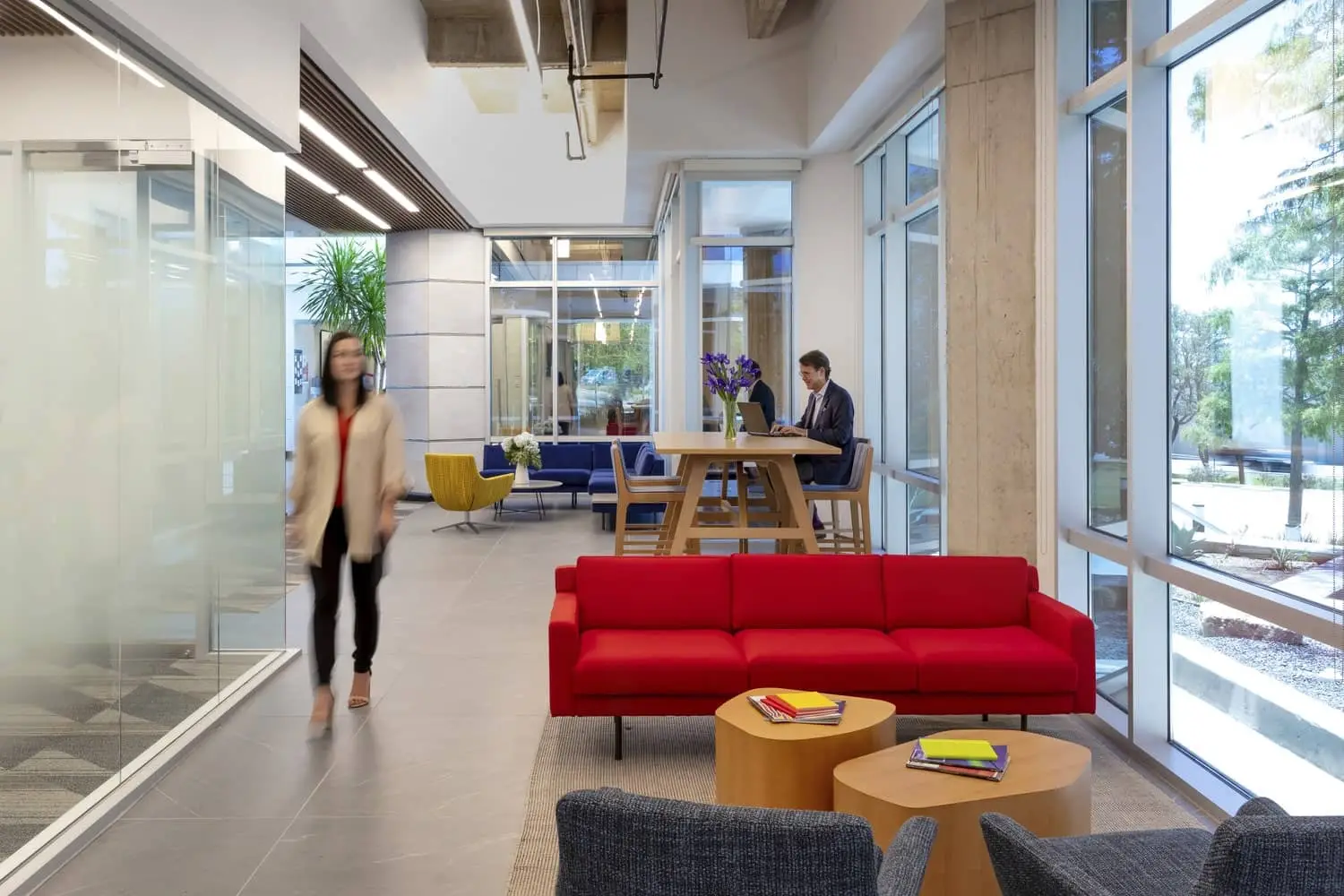
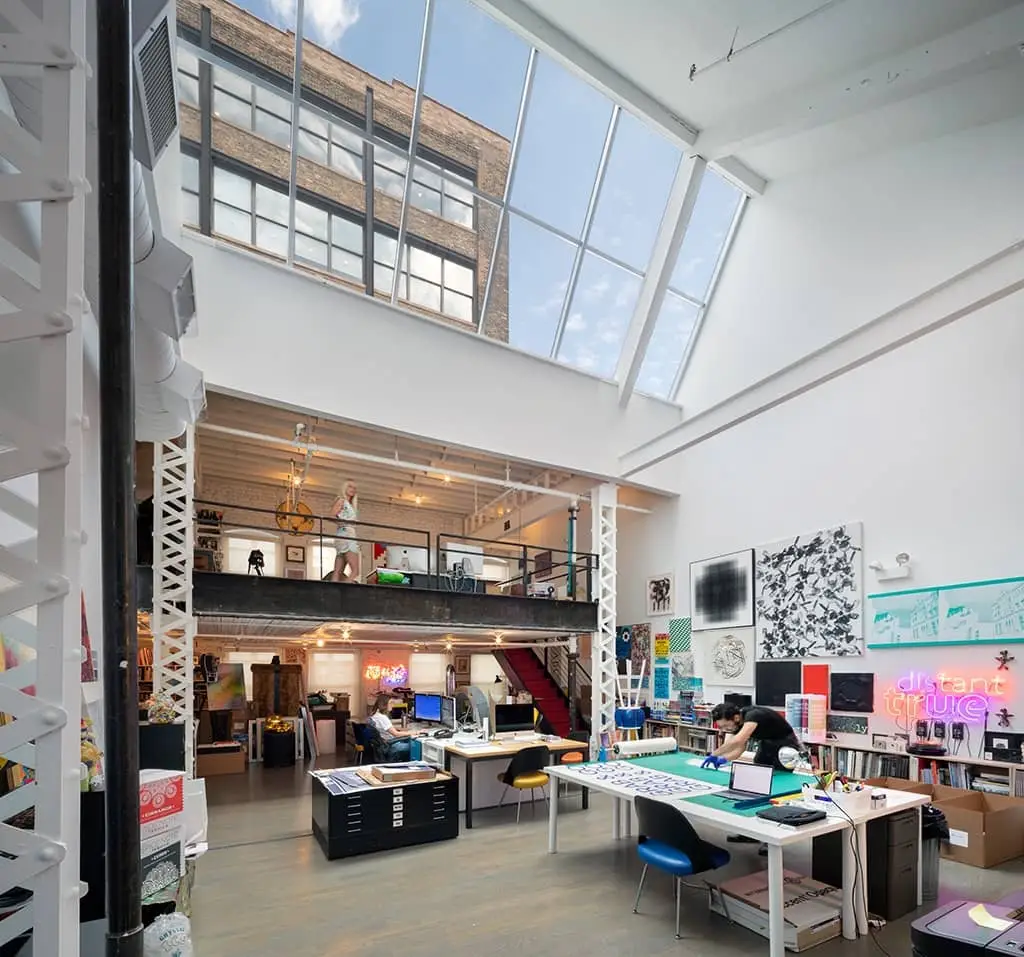
Aesthetics, configuration, flexible meeting spaces, and natural lighting all combine to create an optimal work environment that draws people in.
“We’ve been implementing modern, light-filled office designs centered on well-being and equity. The office design plan features just two standard office sizes (partner and associate), all with glass fronts. They are arranged along bright, open corridors to flood the workspace with natural light, which fosters a more cheerful, collaborative environment,” said Shoss.
Law firms’ traditional office spaces have changed dramatically, thanks to modern technological advances. Physical libraries and data storage rooms have been replaced by digital resources, reducing the need for space and reshaping how interior core areas are utilized. Mayer Brown has also added coffee bars, attorney lounges, and flexible meeting spaces that encourage team building, collaboration, and camaraderie.
Mayer Brown actively involves its younger associates in the design process, using their feedback to shape spaces that are relevant, energizing, and unique — taking office design to the next level to ensure every space maximizes its inclusive culture.
“Ask your people — especially younger teams — what they want from the office,” said Shoss. “Build to be adaptive and future-ready. Be creative, as you are not just designing for today, but looking ahead at office space use and its evolution five to ten years from now. It’s better to be a few steps ahead rather than scrambling to catch up.”
Putting this concept into practice in 2025, Mayer Brown expanded its New York City office at the iconic Rockefeller Center by an additional 75,000 square feet. That office now spans more than 330,000 square feet, offering an innovative and collaborative team environment. The redesigned space features a large conference center and flexible, multi-purpose rooms equipped with modular furniture for easy reconfiguration. The final design deviates from traditional law firm aesthetics and embraces a modern appeal.
Regardless of the industry, it’s important to adapt to changing times. As the legal landscape continues to evolve, Mayer Brown proves that law firms can still lead from their roots while creating workspaces that look, feel, and function like the future. The office is not an outdated fixture. Instead, it’s an important setting where lawyers can sharpen their skills in ways that foster better client service and results.
“The development of our next generation of talent hinges on the implicit learning that occurs in the office,” said Shoss. “When you get office design right, it serves as a catalyst in shaping company culture and success.”
This article first ran in the 2026 edition of KBS Premier magazine, which can be found here. To learn more about KBS and the commercial real estate industry, visit KBS.com/Insights.