
Institutional investors left the Bay Area during the pandemic. But a REIT has eyes on an attractive entry point.
Between AI startups boosting the office real estate market and Silicon Valley’s domination of the tech talent pool, real estate asset management and investment firm KBS says it is locked in when it comes to the San Francisco Bay Area.
KBS recently brought in California- native and former Bay Area resident Sondra Wenger to lead its institutional capital markets team in Arlington, Virginia. In a sit-down conversation with Wenger, she revealed a slew of reasons why the firm is pitching the Bay’s commercial real estate to cautious institutional investors, some of whom have pulled out of these investments following the pandemic.
“The Bay Area isn’t a market that has had to chase tech,” she said in a video interview. “If you look at some of these other markets like Nashville, Miami, or Denver, it’ s truly a market that was born out of tech.”
The Bay Area has large venture capital investments fueling local AI- focused startups world- renowned educational institutions such as UC Berkeley and Stanford University and mega- tech companies like Google and Apple headquartered here. Because of the water and hills surrounding it all there’s not much land left to build on.
“That really helps to preserve long- term real estate value,” she said.
The company has been investing in the Bay Area’s commercial real estate market for more than 30 years enduring bubbles such as the dotcom in 2000, the 2008 Great Recession and, most recently the Covid- 19 pandemic. And through it all, Wenger says the Bay continued to evolve.
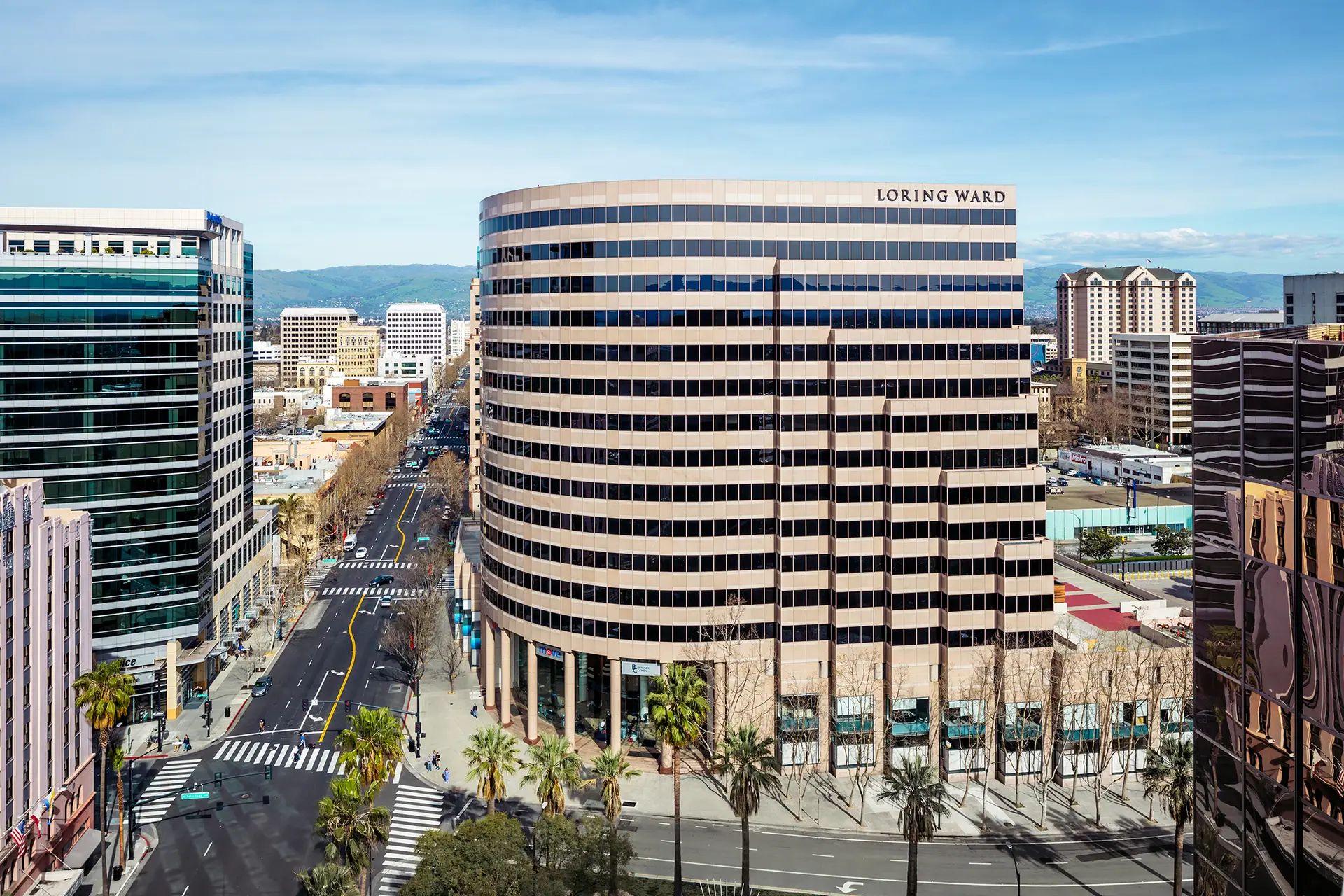
Last year one of KBS’s real estate investment trusts KBS REIT III risked a mortgage loan default for six Bay Area properties because of the nationwide pullback in office leasing, coupled with high debt interest rates. Its South Bay properties, which encompass a 30900-square-foot office tower named Ten Almaden and a 400,000-square-foot office park named The Almaden in San Jose, were included.
KBS was tasked with raising $100 million in new funding from cautious investors. But instead, it did two refinancings in February and sold a property in Kansas for an undisclosed amount last month to pay down the REIT’s debt.
There’s been a recent tide that’ s lifting KBS’s boats in the South Bay, as financial services and the technology sectors implement return-to-office policies and companies desire more modern workspaces.
Cloud- based communication platform provider Zoom renewed its lease at The Almaden and added more square footage. Across the street at Ten Almaden, KBS leased about 80,000 total square feet to mostly law and accounting firms.
“While these occupancies remain in recovery mode, we’re seeing really clear signs of leasing momentum,” she added. “And we’ve got older projects that are converting to other uses, which are really shrinking the office base.”
When it comes to sales, Wenger told The Business Journal that there are fewer large institutional bidders showing up to property sales. That’s less competition for any new investors, making it an “attractive entry point.”
As institutional investors retreated during the pandemic, KBS started to see more private capital investors, regional investors and family- run wealth management firms emerge. Some of these new real estate investors are willing to take risks and pour money into properties that range from core plus to value-add to opportunistic, meaning buildings that either need minor improvements or full- on renovations.
“When the rest of the market is afraid to jump in it creates a long- term possibility,” said Wenger.
Story first published in Silicon Valley Business Journal